Buying by the beach in Sarasota can feel like a dream until you run into four letters that change the plan: CCCL. If you are eyeing a Siesta Key cottage, a Lido tear‑down, or a Longboat Key lot, Florida’s Coastal Construction Control Line is one of the most important rules you need to understand. Many out‑of‑state buyers are surprised by how this line affects design, cost, and even whether a project is possible.
This guide gives you a clear, local view of what the CCCL is, where to check it, how it affects new builds and remodels, and who issues permits. You will leave with a simple checklist and a path to move forward with confidence. Let’s dive in.
CCCL in plain English
The Coastal Construction Control Line (CCCL) is a mapped line along Florida’s sandy Gulf and Atlantic beaches that marks a zone where construction faces extra rules to protect dunes, beaches, and public access. If part of a property is seaward of the line, work there can require a state permit or be limited.
The Florida Department of Environmental Protection (FDEP) administers the program and issues state permits or exemptions for work seaward of the line. You can review the program overview on the Florida Department of Environmental Protection’s CCCL program page for context and tools.
The CCCL is different from FEMA flood zones and from local coastal setback rules. You can be in a FEMA V‑zone and still be landward of the CCCL, or the other way around. Local governments also have coastal setback lines that are separate from the CCCL and may be stricter.
Where the line matters in Sarasota
In Sarasota County, the CCCL runs along the Gulf‑side barrier islands, including Siesta Key, Lido Key, Longboat Key, and Casey Key. On many parcels, the line crosses through the middle or rear of the lot. Older homes may straddle the line because they were built before current rules.
Here is how to check a property:
- Start with the Florida Department of Environmental Protection’s CCCL program page, which provides mapping resources and guidance.
- Cross‑check with Sarasota County’s planning and development resources for coastal setbacks and local permit guidance on the official county website.
- Order a current boundary and topographic survey that shows the CCCL and local setback lines on your specific lot.
- Confirm your findings with the county or municipal permitting staff for an official interpretation.
Online maps are a great first look, but a current survey plus county or FDEP verification is what drives permit decisions.
How the CCCL changes what you can build
If any part of your project is seaward of the CCCL, it may require a state permit or be prohibited. Typical projects affected include new homes, additions, pools, decks, pilings, and any work that alters dunes, vegetation, or the placement of fill.
When state review is required, designs often need to show that the project will not harm the beach or dune system or block public access. In practice, that can mean:
- Smaller or shifted footprints landward of the line
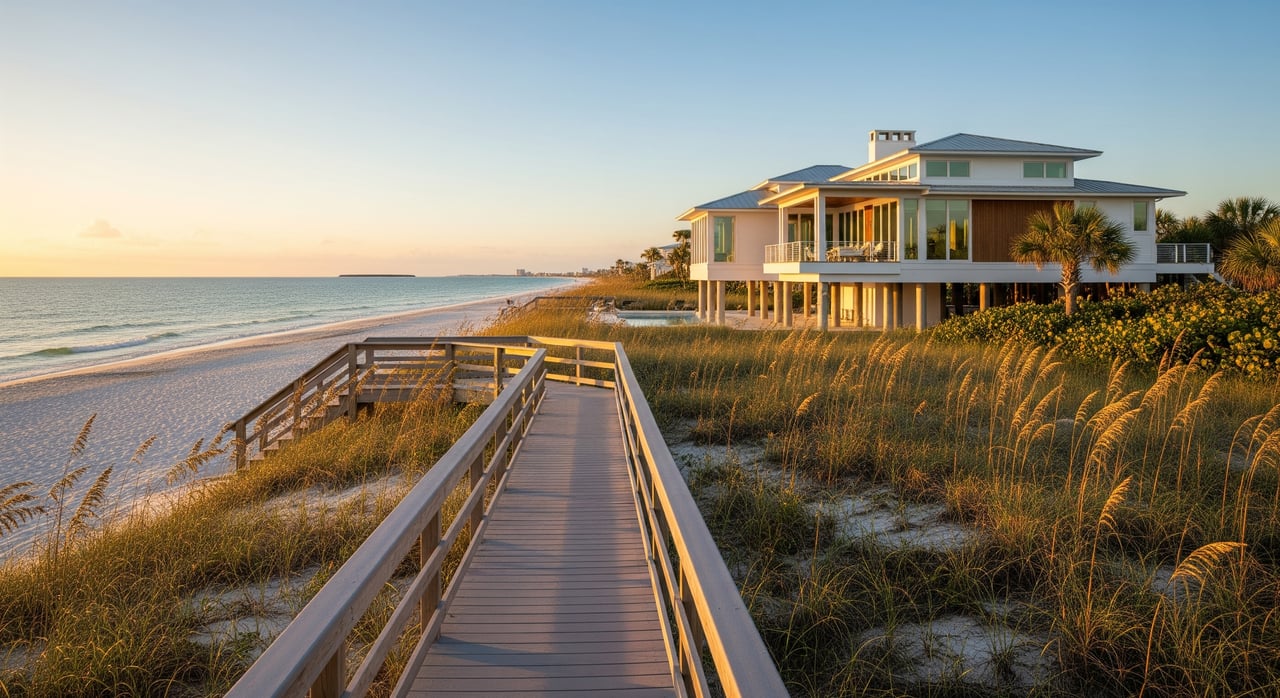
- Elevated structures on pilings rather than solid walls at ground level
- Dune protection, dune rebuilding, and native vegetation restoration as part of the plan
Routine maintenance and emergency repairs are often allowed without a new CCCL permit, but any increase in footprint or change that affects dunes or the beach can trigger a permit requirement. Replacement in kind can be limited by scale and impact.
FEMA, building code, and local rules
The CCCL is only one piece of the puzzle. You also need to plan for:
- FEMA flood zones and National Flood Insurance Program requirements. You can verify your flood zone on FEMA’s Map Service Center. Elevated foundations, breakaway walls, and V‑zone design rules may apply.
- Florida Building Code windstorm and elevation standards.
- Local coastal setback ordinances in Sarasota County and island municipalities, which can be stricter than state CCCL rules.
It is common for all three layers to apply. A project that meets local setbacks still may need a state permit if any part is seaward of the CCCL.
What to expect with tear‑downs and major remodels
If you plan to replace an older home, especially one that sits close to the beach or crosses the CCCL, expect tighter limits on size and location. Some rebuilds are restricted to the prior footprint or require elevation changes and pilings. Expansion seaward of the line is often denied.
These projects can also add cost and time. State reviews, coastal engineering studies, and dune restoration plans can extend timelines by months and add material expense. Planning early with the right team can save you from redesigns and delays.
Who issues which permits
- State permits: FDEP reviews work seaward of the CCCL and issues the state CCCL permit or exemption when applicable.
- Local permits: Sarasota County or the local municipality handles building permits, local coastal setbacks, and inspections.
Most coastal projects need both levels of approval. Coordinate early so you are not stuck with a local approval that cannot be built due to state limits, or vice versa.
Buyer due diligence checklist
Use this checklist during your inspection period. Save or print it for your files.
- Check official maps early
- Review the Florida Department of Environmental Protection’s CCCL program resources for the mapped line and guidance.
- Verify FEMA flood zones on FEMA’s Map Service Center.
- Order a current survey
- Request a boundary and topo survey with the CCCL and local coastal setbacks shown.
- Ask for permit history
- Request past FDEP CCCL permits, county building permits, and any as‑built drawings.
- Contact permitting officials
- Call Sarasota County or the municipality for pre‑application guidance on what is likely permitted and required studies.
- Budget for extra costs and time
- Plan for state review periods, potential coastal engineering, dune mitigation, and elevated foundation systems.
- Consult coastal specialists
- Engage a coastal engineer, an architect, and a contractor with CCCL and barrier‑island experience.
- Confirm insurance implications
- Get preliminary flood and wind insurance quotes based on your expected design and elevation.
- Check records and title
- Review deeds, easements, and any public beach or nourishment easements that may affect use.
- Understand nonconforming situations
- Ask how replacement in kind is treated for your parcel and what triggers full compliance.
- Ask about beach nourishment plans
- Learn whether upcoming nourishment could influence future beach width or permit conditions.
Cost, timeline, and risk management
The CCCL does not end projects, but it can shift where and how you build. Plan for design focused on impacts to dunes and public access, possible elevation on pilings, and mitigation such as dune vegetation. These requirements can add both dollars and months to a project.
You reduce risk by front‑loading research: confirm the line on a survey, talk with permitting staff, and bring a coastal engineer into your due diligence. That homework often pays for itself by preventing design changes or permit denials later.
Sarasota areas to watch
On Siesta Key, Lido Key, Longboat Key, and Casey Key, many narrow or older lots have limited landward area behind the CCCL. Expect closer attention to footprints and foundations. Parcels that straddle the line may still be excellent buys, but your design and budget need to reflect the constraints from day one.
Your next steps
If you are serious about a coastal property, make the CCCL part of your first look. Check the Florida Department of Environmental Protection’s CCCL program for official context, use FEMA’s Map Service Center to understand flood zones, and consult Sarasota County’s permitting resources for local setbacks. Then assemble your surveyor, coastal engineer, and contractor to vet the path forward.
When you want local insight and a smooth process, connect with a knowledgeable, island‑focused agent who can coordinate the right experts and keep your timeline on track. If you are considering Siesta, Lido, Longboat, or Casey Key, reach out to Jesse Griffin for tailored guidance from offer to permits to closing.
Ready to move from questions to a plan? Contact Jesse today to discuss your goals and the property you have in mind.
Contact Jesse Griffin for a personalized strategy and introductions to trusted surveyors, engineers, and builders.
FAQs
What is Florida’s CCCL and why does it matter in Sarasota?
- The Coastal Construction Control Line marks areas near the beach where state rules add protection for dunes and public access, which changes permit needs and design for many Sarasota coastal parcels.
How do I check if a Siesta Key lot is seaward of the CCCL?
- Start with the Florida Department of Environmental Protection’s CCCL program resources, then get a current survey that shows the line and confirm with county permitting staff.
Does being in a FEMA V‑zone mean I am seaward of the CCCL?
- No, FEMA flood zones and the CCCL are separate; a property can be in a V‑zone but landward of the CCCL, or vice versa, so you must verify both.
Who issues permits for a Longboat Key tear‑down near the beach?
- FDEP reviews and permits work seaward of the CCCL, while the local jurisdiction handles building permits and local coastal setbacks, so most projects need both.
What extra costs should I expect for building seaward of the CCCL?
- Plan for potential coastal engineering studies, elevated foundation systems like pilings, dune mitigation or planting, and added time for state review.
Where can I verify flood zone status for a Sarasota beach property?
- Use FEMA’s Map Service Center to look up the property’s flood zone and review V‑zone requirements alongside CCCL and local setback rules.