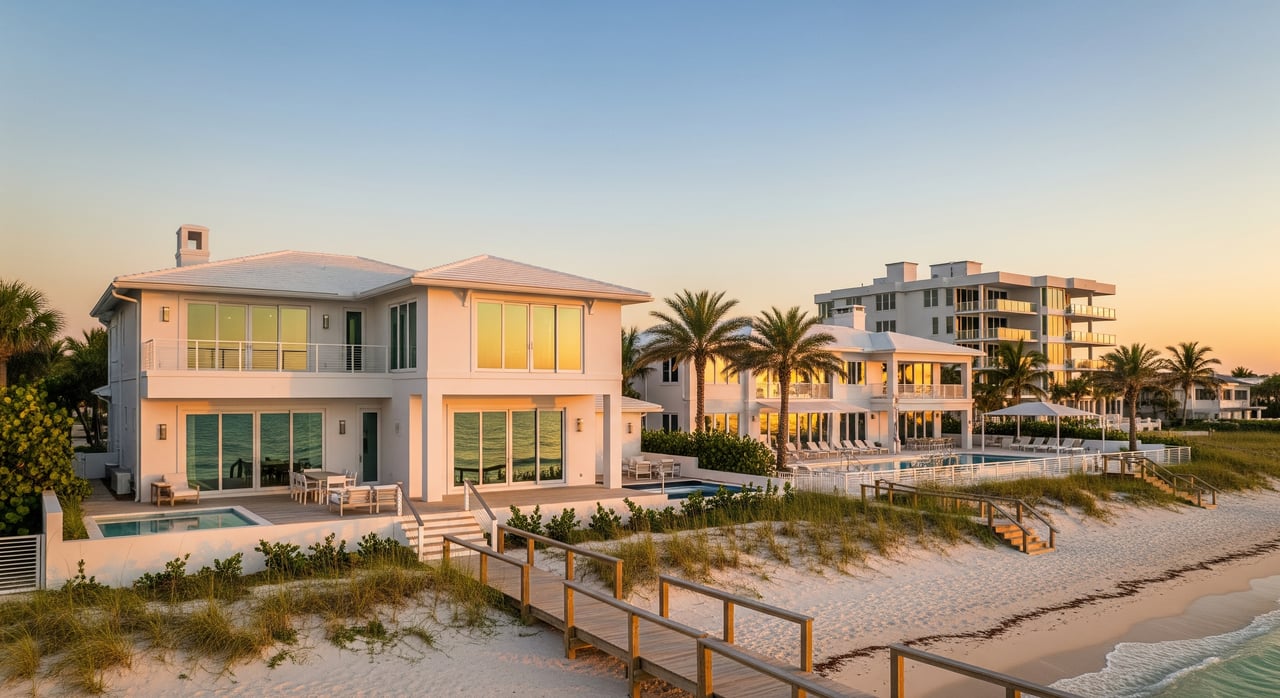
Wondering whether a condo or a single-family house will truly cost you less to own on Longboat Key? The sticker price only tells part of the story, especially on a barrier island where insurance, reserves, and coastal maintenance can swing your budget. If you are buying a second home or an investment property, it pays to look past HOA fees and dig into the full cost picture.
In this guide, you will get a clear, practical breakdown of the major cost drivers on Longboat Key, plus side-by-side examples and a due diligence checklist you can use before you make an offer. Let’s dive in.
What “true cost” means on Longboat Key
Beach living comes with unique expenses that do not always show up on a listing sheet. Beyond your mortgage, the biggest budget items tend to be insurance, reserves for repairs, HOA or condo fees, and coastal maintenance like roofs and seawalls.
Key cost drivers to compare:
- Purchase price and financing requirements
- Property taxes and any special assessments
- Insurance: homeowners or HO‑6, wind, and flood
- HOA or condo fees and reserve funding
- Exterior maintenance and capital repairs
- Utilities and routine operating costs
- Rental rules and revenue potential
- Long-term risks from age, storms, and coastal conditions
Purchase price and financing
Condos and single-family homes can finance differently. Many lenders require a condominium project review or approval before they will underwrite a loan. If a project is not approved or has high delinquency, you may face higher down payments or fewer loan options.
Financing can be straightforward for houses, while condos sometimes require extra steps due to project-level criteria like owner-occupancy ratios and financial health.
What to verify
- Whether the condo project appears on lender or agency approved lists
- HOA delinquency rates and owner-occupancy levels that can affect financing
- Lender options for conventional, jumbo, or portfolio loans for coastal condos and houses
Property taxes on Longboat Key
Property taxes in Manatee County include county, school, and special district millages. Florida’s homestead exemption applies only to a primary residence. Second homes and investment properties do not receive homestead benefits, which affects your annual tax bill.
For condos, confirm how any municipal or special district fees are handled. Some associations collect and remit certain assessments, while others do not.
What to verify
- Current assessed value and tax details with the Manatee County Property Appraiser
- Any special district fees or town assessments that apply to the property
- For condos, whether the association collects funding for municipal assessments
Insurance realities on the coast
Insurance is a major cost driver on Florida’s Gulf Coast. Single-family owners typically purchase a full homeowners policy for the structure and contents, often with separate wind or hurricane coverage, plus flood insurance when required. Premiums for coastal houses are usually higher because the policy covers the entire structure and land improvements.
Condo owners usually rely on the association’s master policy for the building exterior and common elements. Unit owners carry an HO‑6 policy for interior build-out and personal property, plus liability. The association’s wind or hurricane deductible can be significant and may be assessed to owners after a covered event, depending on the bylaws.
The Florida insurance market has been volatile, which can affect availability and pricing for coastal properties. Flood risk is another factor and depends on FEMA flood zones and elevation.
What to verify
- For condos: the association’s certificate of insurance, master policy limits, wind or hurricane deductible, and whether the policy is “bare walls” or “all‑in”
- For houses: quotes for homeowners coverage that include wind or hurricane risk, plus flood insurance based on the property’s flood zone and elevation
- For both: whether an Elevation Certificate exists that could help reduce flood premiums
HOA fees, reserves, and assessments
Condo or HOA fees can cover a lot, including master insurance, exterior maintenance, landscaping, amenities, management, and sometimes utilities. Fees vary by building age, condition, and amenities.
Well-funded reserves reduce the risk of special assessments for big-ticket items such as roofs, elevators, façade repairs, and seawalls. After the Surfside tragedy, Florida increased attention on structural safety, inspections, and reserve transparency. Reviewing the association’s financials is essential before you buy.
What to verify
- Current monthly fee and the line items it covers
- The latest reserve study and funding level for major components
- Operating budget, 2–3 years of financials, delinquency rate, and meeting minutes for planned projects
- Any approved or proposed special assessments
Maintenance and capital items
For condos, the association typically handles exterior maintenance and common elements. You focus on the interior. For single-family properties, you are responsible for the roof, exterior, landscaping, pool equipment, and coastal infrastructure like seawalls.
A common budgeting rule for houses is 1 to 3 percent of home value per year for maintenance. Coastal properties often sit at the higher end due to salt corrosion, storm preparation, and pest exposure. Seawall repairs can be significant and may be unplanned.
What to verify
- Age and condition of the roof, HVAC, windows, and seawall
- Any inspection reports for structural or coastal issues
- Local seawall code requirements and any planned work nearby
Utilities and monthly bills
Condo associations sometimes include water, trash, basic cable, or internet in the monthly fee. Electric and interior HVAC use are typically your responsibility. Single-family homes carry all utilities, and irrigation or pool costs can add up in Florida’s climate.
What to verify
- Which utilities are included in a condo’s monthly fee
- Typical electric usage by season and HVAC age or efficiency
- Irrigation, pool, and landscaping service costs for houses
Rental rules and revenue
If you plan to rent, there are two layers of rules to check. First, the Town of Longboat Key sets local regulations for permitted rental types, licensing, and occupancy taxes. Second, associations often impose minimum lease terms, registration requirements, or caps on the number of rental units.
Restrictions on short-term rentals can reduce income potential. If rentals are allowed, factor in vacancy, management, cleaning, platform fees, and occupancy taxes when you model returns.
What to verify
- Association bylaws and rental policies, including minimum lease length and any waiting periods n- Town licensing, permits, and occupancy tax requirements
- Documented rental history for the specific unit or property if available
Long-term risks to plan for
Older coastal buildings may require major capital work over time. Structural inspection reports and reserve studies are critical for condos. For houses, storm surge, elevation, and seawall condition matter to both insurability and long-term costs.
Coastal impacts like sea-level rise, storm intensity, and erosion can influence future expenses and marketability. Review FEMA flood maps and local planning documents as part of your risk assessment.
What to verify
- Most recent structural or engineering reports for condos
- Flood zone status and available Elevation Certificate for any property
- Any town programs or plans related to beach renourishment and coastal protection
Side-by-side examples (illustrative)
These examples are hypothetical to show how costs can add up. Replace the assumptions with quotes and documents for the property you choose.
Shared assumptions:
- Purchase price: 1,000,000 dollars
- Property tax estimate for illustration: 1.2 percent of value (12,000 dollars per year)
- Mortgage and closing costs excluded
Scenario A — Condo (oceanfront mid‑rise)
Assumptions:
- HOA fee: 1,200 dollars per month
- HO‑6 and contents insurance: 1,200 dollars per year
- Reserve buffer for potential deductible assessment: 500 dollars per year
- Property tax: 12,000 dollars per year (about 1,000 dollars per month)
- Utilities: 300 dollars per month
- Routine interior maintenance: 150 dollars per month
Approximate monthly total: 2,750 dollars
Approximate annual total: 33,000 dollars (about 3.3 percent of purchase price)
Scenario B — Single‑family home (oceanfront)
Assumptions:
- Exterior maintenance and reserves: 2 percent of value per year, 20,000 dollars
- Homeowners insurance plus wind or hurricane: 8,000 dollars per year
- Flood insurance: 3,000 dollars per year
- Property tax: 12,000 dollars per year (about 1,000 dollars per month)
- Utilities: 500 dollars per month
Approximate monthly total: 4,083 dollars
Approximate annual total: 49,000 dollars (about 4.9 percent of purchase price)
What the numbers suggest
- The condo shows lower monthly cash outflow in this example because exterior maintenance and building insurance are pooled in the HOA fee.
- The house offers more control over maintenance and customization, yet exposes you directly to larger capital items and higher insurance.
- The swing factor for condos is association financial health. Underfunded reserves or a large deductible assessment can materially change the picture.
Due diligence checklist
Use this list before you make an offer, then update it with property-specific quotes and documents.
- Association documents: declaration and bylaws, current budget, reserve study, 2–3 years of financials, meeting minutes, delinquency list, and certificate of insurance
- Insurance quotes: HO‑6 for condos or full homeowners plus wind and flood for houses, with deductible details and any rental use limitations
- Taxes and fees: current assessed value, millage, and any special district assessments through the county
- Rentals: association rental policies, town licensing and occupancy taxes, and realistic revenue modeling that includes vacancy and costs
- Property condition: home inspection, structural reports for older coastal buildings, and seawall evaluation if applicable
- Financing: lender expectations for condo project approval and loan options for both property types
Which one fits your goals?
If you want lower hands-on maintenance and amenities, a condo may deliver a predictable monthly number when the association is well funded. If you value control, yard space, and fewer shared decisions, a house can be the better lifestyle fit. On Longboat Key, the deciding factor is often insurance and capital exposure rather than HOA fees alone.
The smartest next step is to gather the exact documents and quotes for the properties you are considering, then compare them line by line to the scenarios above. If you would like a local, property-specific cost-to-own review, reach out to Jesse Griffin for guidance tailored to your goals.
FAQs
What is cheaper to own on Longboat Key?
- It depends on HOA fees, association reserves, and insurance. Condos can have lower monthly out-of-pocket costs, while houses carry higher direct insurance and maintenance but offer more control.
How risky are condo special assessments in Florida?
- Risk varies by reserve funding, building age, inspection findings, and capital plans. Always review the reserve study, financials, minutes, and any pending projects before you buy.
Do condo owners pay less for insurance?
- Unit owners often pay less for HO‑6 interior coverage, but the building’s master policy may have a large wind or hurricane deductible that can be assessed to owners after a storm.
How do Longboat Key rental rules affect value?
- Town rules and association policies both apply. Minimum lease terms or rental caps can limit income potential, so verify all requirements and model vacancy and costs.
What red flags should I watch for in a condo?
- Underfunded reserves, recent or proposed special assessments, high HOA delinquencies, insurance nonrenewals, and missing structural reports for older buildings.
What red flags should I watch for in a house?
- Seawall condition and recent repairs, roof age, elevation and flood risk, and insurance quotes that are significantly higher than expected.